Introduction
Football fans follow much more than the final score. From international tournament draws to the Champions League knockout rounds, there is always something to discuss, analyse and debate. Search phrases such as “sports odds ozbonusbet.sbs 🇦🇺,” “auslosung nations league,” and “champions league achtelfinale” reflect different interests around football, match information and European competitions.
At DonPredict , we think , the most useful approach is to understand how competitions work, how fixtures are determined and which statistics can help explain a team’s performance. The Nations League gives national teams a structured competition, while the UEFA Champions League brings Europe’s leading clubs together on the continental stage.
This guide explains the key football terminology, competition formats and match-analysis factors in straightforward English. It also covers the importance of checking official information instead of relying on unverified claims or misleading headlines.
Understanding Sports Odds OzBonusBet.sbs 🇦🇺 in a Football Context
The phrase “sports odds ozbonusbet.sbs 🇦🇺” combines a website name, an Australian reference and a common football-related search term. However, the appearance of a website in search results does not automatically establish that its claims, ratings or information have been independently verified.
When reading online sports content, it helps to separate three things: factual match information, statistical analysis and promotional claims.
Factual match information includes kick-off times, team line-ups, competition standings and confirmed results. Statistical analysis covers indicators such as possession, shots on target, goals scored and defensive records. Promotional claims, on the other hand, may describe services or offers and should not be mistaken for independent football research.
Why reliable football information matters
A useful football article should explain where its information comes from and when it was last checked. Team news can change quickly, particularly when injuries, suspensions or fixture congestion affect a squad.
Readers should also distinguish historical performance from future outcomes. A team that has won several matches in a row may be playing confidently, but its previous results do not guarantee that the next match will follow the same pattern.
For a football analysis website, transparency is more valuable than exaggerated promises. Clear statistics, sensible explanations and links to official competition information give readers a better understanding of the sport.
Auslosung Nations League: How the Draw Works
The German phrase “Auslosung Nations League” means “Nations League draw.” It refers to the process used to determine which national teams are placed together in the competition’s groups.
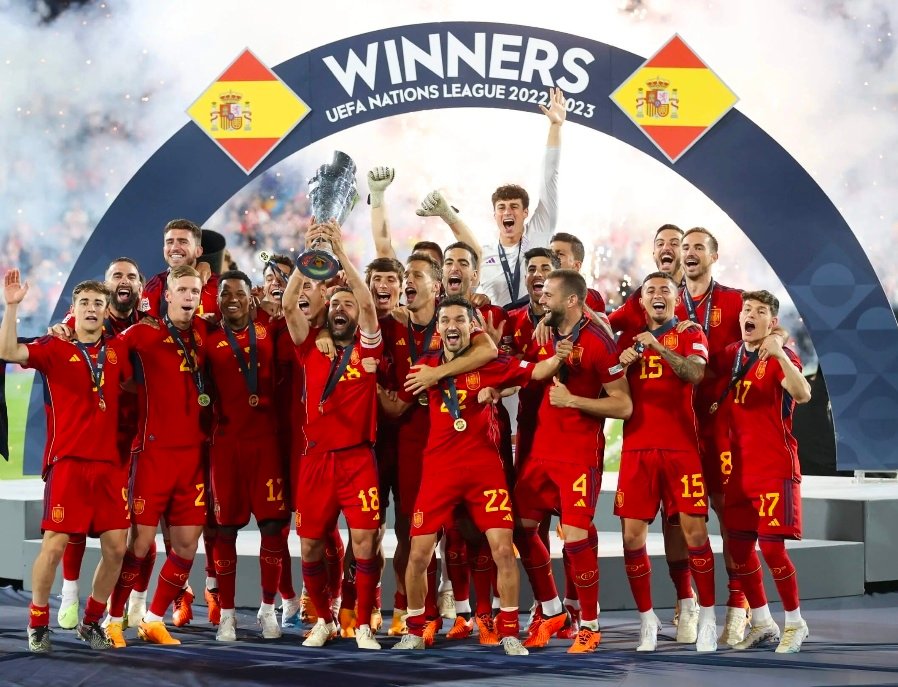
The UEFA Nations League was introduced to provide national teams with more meaningful international fixtures than a schedule made up entirely of friendly matches. Teams compete within leagues, with promotion and relegation adding importance to their results.
The 2026/27 edition is the fifth edition of the competition. Its league-phase draw took place in Brussels on 12 February 2026. According to UEFA’s published information, teams were allocated to different leagues and groups according to the competition’s access list and draw rules.
How teams are divided
The competition uses four leagues, labelled A, B, C and D. League A contains the highest-ranked group of participating teams, while the other leagues provide competitive matches between nations at different levels.
The group structure for the 2026/27 season is:
- League A: Four groups of four teams.
- League B: Four groups of four teams.
- League C: Four groups of four teams.
- League D: Two groups of three teams.
The exact allocation depends on the official competition rules. Seeding helps organise the draw, while additional restrictions may apply under UEFA regulations.
What happens after the Nations League draw?
Once the groups are confirmed, teams prepare for the league phase. Results determine group standings and can affect qualification for later rounds, promotion to a higher league or relegation.
For 2026/27, the league phase began in September 2026 and continues into November. The League A quarter-finals are scheduled for March 2027, followed by the final tournament in June 2027.
These dates matter to supporters planning which matches to watch. They also help explain why a national team’s performance over several matchdays can be more important than the result of one individual game.
What makes the Nations League interesting?
The competition creates matchups between national teams with different playing styles. Some sides prefer patient possession, while others rely on quick counterattacks, aggressive pressing or strong defensive organisation.
A group containing technically gifted teams may produce very different matches from one where physical duels and set pieces play a larger role. The draw therefore provides an early look at possible tactical challenges, although the eventual standings depend on performances on the pitch.
For official group information and competition updates, visit the UEFA Nations League website.
Champions League Achtelfinale: Everything Fans Should Know
“Achtelfinale” is the German word for the round of 16. In the UEFA Champions League, this stage brings together 16 clubs that have progressed through the league phase and knockout play-offs.
The modern Champions League format changed in the 2024/25 season. Instead of the previous traditional group stage, the competition now begins with a 36-team league phase. Each club plays eight different opponents, with four matches at home and four away.
The overall league standings then determine which teams progress directly and which must compete in the knockout phase play-offs.
How clubs reach the round of 16
Under the current format, the top eight teams in the league phase advance directly to the round of 16. Teams finishing ninth to 24th compete in two-legged knockout play-offs, with the winners joining those eight clubs.
Teams finishing 25th or lower are eliminated from the competition.
This system makes the league phase important because every result contributes to the overall standings. A strong finish can provide direct qualification and remove the need to play an additional knockout tie.
What happens in the round of 16?
The round of 16 is a knockout stage involving eight ties. Most ties are played over two legs, with each team playing once at home and once away.
The aggregate score across both matches determines which club advances. If the teams are level after the second leg, the tie proceeds according to the competition’s applicable extra-time and penalty-shootout rules.
The final is different: it is decided by a single match at a predetermined venue.
Why the draw matters
The knockout draw shapes the path to the quarter-finals, semi-finals and final. A club may face an opponent whose strengths create a difficult tactical challenge, even if that opponent finished lower in the league phase.
Fans often look at previous meetings, defensive records, recent form and player availability when discussing potential ties. These factors provide context, but they cannot tell us with certainty how a future match will finish.
Official fixtures, draw procedures and competition updates are available through the UEFA Champions League website.
Comparing the Nations League and Champions League
Although both competitions are organised by UEFA, they serve different purposes.
| Feature | UEFA Nations League | UEFA Champions League |
|---|---|---|
| Teams involved | National teams | Club teams |
| Main competition stage | League phase | League phase |
| Group or league structure | Four leagues | One 36-team league table |
| Qualification pathway | Standings, promotion and knockout qualification | League standings and knockout play-offs |
| Round of 16 | Not the standard name for its main knockout stage | Official knockout round |
| Main sporting focus | International football | European club football |
The Nations League allows supporters to compare national teams and follow international rivalries. The Champions League focuses on club football, where squads often combine domestic and international players.
Both competitions reward consistency, but the demands are different. International coaches have limited time to work with players, while club managers usually have more regular training sessions and a longer domestic season.
Football Statistics That Help Explain a Match
Looking at a scoreline tells only part of the story. Two teams can finish a match with the same result despite producing very different performances.
A closer look at the numbers can help explain why one team controlled the game, why another defended effectively or why a match remained close.
Goals scored and conceded
Goals scored show a team’s attacking output over a selected period. Goals conceded provide a basic indication of defensive performance.
These figures become more useful when considered together. A team with a strong attack but a weak defensive record may play more open matches than a side that prioritises defensive structure.
Shots and shots on target
Total shots show how frequently a team attempts to score. Shots on target indicate how many efforts require a save or result in a goal.
However, volume alone does not tell the full story. A team can take many low-quality shots from distance without creating especially dangerous chances.
Possession and passing
Possession measures how much time a team spends controlling the ball. Passing accuracy provides additional information about how successfully it moves possession around the pitch.
High possession does not automatically mean a team is playing better. Some teams deliberately concede the ball before attacking quickly into space.
Expected goals
Expected goals, commonly shortened to xG, estimates the probability that a particular shot will result in a goal, based on characteristics of the chance and the model used.
It can help analysts compare chance creation with actual scoring. Still, different providers may use different models, so xG values should be read with their methodology in mind.
Head-to-head records
Previous meetings can provide historical context, especially when two teams have developed a familiar rivalry. However, older results may have limited relevance if managers, players or tactical systems have changed substantially.
A balanced preview combines historical information with more recent performances rather than relying on a single statistic.
How Team News and Tactics Shape European Football
Team selection can make a major difference in high-level competitions. An absent centre-back may change a team’s defensive balance, while a missing creative midfielder can reduce its ability to progress the ball through central areas.
Before interpreting a match, consider the following factors.
Injuries and suspensions: Confirmed absences can affect the available options, but rumours should not be treated as official team news.
Fixture congestion: Clubs competing in several competitions may need to rotate players. Fatigue can affect pressing intensity and recovery runs.
Home and away performance: Some teams play more aggressively in front of their supporters, while others are especially effective on the counterattack away from home.
Tactical matchups: A high defensive line can create opportunities for fast forwards, while a compact defence may frustrate opponents who depend on central passing combinations.
Set pieces: Corners, free kicks and penalties can have an important influence on close matches.
These details help make a football preview more useful. They also remind readers that a match is shaped by several connected factors, not just league position or recent results.
Where to Find Trustworthy Competition Information
When following the Nations League or Champions League, official competition sources are a good starting point for dates, regulations, results and standings.
Useful resources include:
- UEFA Nations League for international fixtures, groups and results.
- UEFA Champions League for club competition updates and knockout information.
- Wikipedia: UEFA Nations League for general background and historical context.
- Wikipedia: UEFA Champions League for the tournament’s history and format.
Wikipedia is useful for an introduction, but readers should check its cited sources and compare time-sensitive information with official UEFA announcements.
Quick Wiki Data Table
The following table provides a brief reference for the two competitions. It is a general information summary, not an official database record.
| Data field | UEFA Nations League | UEFA Champions League |
|---|---|---|
| Organising body | UEFA | UEFA |
| Competition type | International national-team competition | European club competition |
| First edition | 2018/19 | 1955/56, originally the European Cup |
| Current league-phase format | Four leagues, with groups within each league | 36 clubs in one league phase |
| League-phase matches per team | Depends on the league and group | Eight |
| Knockout pathway | Depends on league and final standings | Top eight qualify directly; places 9–24 enter play-offs |
| Official information | UEFA website | UEFA website |
| General reference | Wikipedia | Wikipedia |
Frequently Asked Questions
What does “Auslosung Nations League” mean?
It means “Nations League draw” in German. The draw determines how national teams are allocated to groups under the competition’s rules.
What is the Champions League Achtelfinale?
It is the German term for the Champions League round of 16, the knockout stage involving 16 clubs.
How many teams play in the Champions League league phase?
The current format includes 36 clubs. Each team plays eight different opponents before the standings determine who progresses.
Do the top eight Champions League teams qualify directly for the round of 16?
Yes. Under the current format, the top eight qualify directly. Teams ranked ninth to 24th enter the knockout phase play-offs.
When does the 2026/27 Nations League league phase take place?
The league phase runs from September to November 2026, with the League A quarter-finals scheduled for March 2027 and the finals in June 2027.
Are the Nations League and Champions League the same competition?
No. The Nations League is for national teams, whereas the Champions League is a European competition for clubs.
Which football statistics are useful for match analysis?
Goals, goals conceded, shots on target, expected goals, possession, player availability and recent performances can all provide useful context. No single statistic explains every match.
Is historical head-to-head information enough to predict a result?
No. Previous meetings can provide context, but changes in squads, managers, tactics and form mean historical results should not be treated as guarantees.
Why should readers check official football sources?
Official sources are the most reliable starting point for confirmed fixtures, regulations, results and competition announcements. They help readers separate verified information from speculation.
Final Thoughts
Football becomes more interesting when supporters understand the competitions behind the headlines. The Nations League draw explains how national teams are grouped, while the Champions League round of 16 marks a key stage in the European club season.
For DonPredict, the strongest football content is built around accurate information, clear explanations and meaningful statistics. Whether readers are researching “auslosung nations league,” “champions league achtelfinale” or general sports terminology, the aim should be to provide context that helps them follow the game with confidence.
Editorial note: Competition formats and dates can change. Check official UEFA announcements for the latest confirmed information. This article is intended for football education and entertainment, not as a guarantee of sporting outcomes.